Turnaround Time 24-48 Hours!
Painting Estimation: Key Tips for Accurate Costing of Interior Painting Projects
Paint is the last thing that goes on a building and, in competitive bidding environments, often the first place where a contractor quietly bleeds margin. A coat of paint looks simple from the outside. From the inside of a project budget, it is anything but. Surface conditions vary room to room. Access requirements change the labor math entirely. Material specifications written into architect packages can double the cost of what a field foreman assumed was a straightforward repaint.
The contractors who win profitable painting work are rarely the ones with the lowest material costs or the fastest crews. They are the ones whose painting estimation services produce numbers that actually reflect the job in front of them, not a template from three projects ago.
This guide breaks down interior painting cost estimation from the ground up: what drives costs, where estimators routinely leave money behind, how to approach both residential and commercial work, and what a professional estimating process actually looks like when it is done right.
Why Do Interior Painting Estimates Go Wrong?
Most painting estimate failures trace back to one of three root causes: incomplete scope capture, incorrect surface area calculations, or undercosted surface preparation. Each of these is avoidable with a disciplined approach to painting project cost analysis before a bid is submitted.
Scope gaps happen when estimators price what they can see easily and gloss over what takes more time to quantify. Trim is a classic example. Baseboards, door casings, window surrounds, crown molding, and chair rails all have different coverage rates and labor times than flat wall surfaces. On a detailed residential renovation with heavy millwork, trim can represent 30 to 40 percent of total labor hours. Leaving it as a rough allowance rather than a measured quantity is a reliable path to a loss.
Surface area errors are surprisingly common, even among experienced estimators. Gross wall area is not the same as paintable wall area. Windows, doors, and openings need to be deducted. On the other hand, estimators sometimes forget to add back the returns on deep window jambs or the inside faces of closet walls that show prominently and require full finish treatment. Neither error is large on a single room. Across a 25-unit apartment renovation, they compound into real money.
Residential Painting Estimating: Where Precision Pays
Residential painting estimating sits at an interesting intersection between technical measurement and client expectation management. Homeowners and developers commissioning residential painting work tend to have strong opinions about finish quality and material selection, which means the specification conversation has to happen before the estimate is finalized, not after.
The two variables that most affect a residential painting estimate are the number of colors specified and the finish level required. A single-color scheme across an entire home moves faster and uses fewer setup and cleanup cycles than a multi-color scheme where every room transitions to a different palette. Each color change is a masking, cutting-in, and cleanup operation that adds time the estimate has to reflect.
Commercial Painting Cost Calculation: Volume, Access, and Specification
Commercial painting cost calculation introduces variables that simply do not appear on residential projects. Occupied space painting, which is common in office renovation, retail rebranding, and healthcare facility maintenance, carries real costs that have nothing to do with the actual painting work: containment setup, off-hours scheduling premiums, phased access coordination, and the slower production rates that come from working around active building occupants.
Specification compliance is another area where commercial painting cost calculation has to be done carefully. Commercial paint specifications are often prescriptive: a specific manufacturer, a specific product line, a specific application method, and a specific dry film thickness verified by inspection. Substituting a cheaper product to hit a lower bid number is a strategy that ends badly when the spec is enforced.
Painting Takeoff Services: Why Measurement Accuracy Is Non-Negotiable
Painting takeoff services use digital measurement tools, such as Bluebeam, PlanSwift, or On-Screen Takeoff, to extract precise surface areas from architectural drawings. On commercial projects where interior elevations, finish schedules, and room data sheets are part of the contract documents, a professional takeoff is not a luxury. It is the foundation of every other number in the estimate.
A digital painting takeoff captures wall areas by room and finish type, ceiling areas by height zone and finish specification, trim quantities by linear foot broken out by profile type, door and frame counts with finish designation, and any specialty coating areas such as epoxy floors, fire-rated coatings, or antimicrobial paint applications in healthcare environments.
The output of painting takeoff services is a quantity sheet that itemizes every paintable surface in the project. This is what accurate painting project costing is built on. It is also what protects the contractor if there is a scope dispute during the job. A quantity sheet derived from drawings is auditable. A number pulled from a rule-of-thumb per-room rate is not.
Painting Material Cost Estimation: Reading the Spec Before You Price
Paint is not a commodity. The difference between a $28 gallon of builder-grade flat latex and a $85 gallon of a specified commercial low-VOC eggshell from a major manufacturer is not just price. It is coverage rate, hide, recoat time, and warranty. Painting material cost estimation has to start with the specified product, not an assumed product substitution.
Coverage rates are where painting material cost estimation most commonly goes wrong. Most paint manufacturers publish theoretical coverage rates of 350 to 400 square feet per gallon. In practice, application method, surface porosity, and the number of coats required all reduce effective coverage. Roller application on a textured surface may yield 250 to 280 square feet per gallon. A porous substrate requiring a second coat of primer will use significantly more material than a smooth surface receiving a single seal coat.
Painting Labor Cost Estimation: The Variable That Determines the Outcome
Labor is typically 60 to 75 percent of the total cost on an interior painting project. Getting painting labor cost estimation right is therefore not a refinement exercise. It is the core of the entire bid.
Production rates are the building block of any labor estimate. A painter applying flat latex to smooth drywall walls with a roller can typically cover 150 to 200 square feet per hour at a steady pace, inclusive of setup, cutting in at edges, and rolling the field. Drop that same painter onto a textured ceiling with obstructions, or into a bathroom with extensive tile-adjacent cutting work, and the rate falls to 60 to 100 square feet per hour.
The Case for Getting Painting Estimation Right
Interior painting is a finish trade, and finish trades carry reputational weight that extends well beyond the individual project. A contractor who delivers clean, accurate, on-budget painting work on a commercial tenant improvement gets invited back for the next one. A contractor who wins on a low number and then battles through change orders and scope disputes does not, regardless of how good the final product looks.
Accurate painting estimation services are what make the difference between a profitable book of work and a cycle of winning bids that erode margin from day one. Whether that means investing in professional painting estimating services for complex commercial bids, deploying digital painting takeoff services to eliminate quantity errors, or simply committing to a more rigorous internal process on residential work, the return on estimation quality is direct, measurable, and repeatable.
Price the work correctly the first time. Everything else in the project gets easier from there.
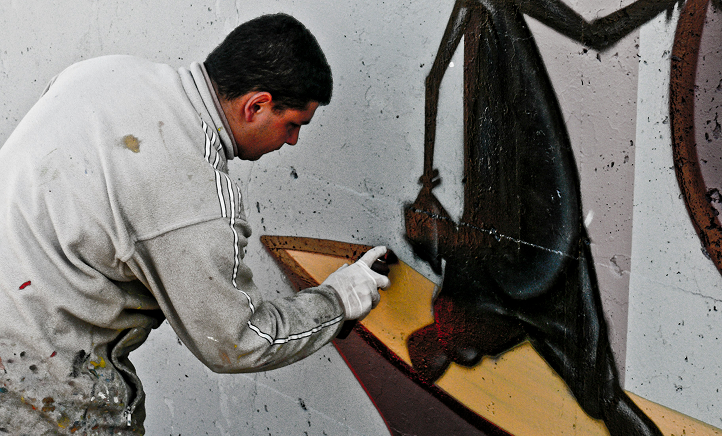
We estimate painting costs from surface preparation through primers and final coats.