Turnaround Time 24-48 Hours!

Interior finishes are where a construction project becomes a building people actually use. They are also where budgets quietly fall apart. Partitions get added late. Ceiling systems get upgraded during design development. Millwork scopes expand when clients see what is possible. By the time a project reaches the finish trades, the original cost assumptions are often long out of date, and the team is left managing a gap that should never have existed.
That is the core problem interior finishes estimation is designed to solve. When the quantities are measured carefully, the materials are priced accurately, and the labor assumptions reflect real field conditions, project teams can plan with confidence. They can catch scope creep early, evaluate alternates with actual numbers, and walk into construction knowing their budget reflects what the drawings actually show. On commercial and large-scale interior projects, that kind of cost clarity is not a luxury. It is a basic requirement for delivering work that performs financially.
Interior finishes sit late in the construction sequence, which means cost problems in this scope tend to surface late as well. By the time partition layout changes, ceiling system upgrades, or millwork additions show up as budget variances, the project has often already committed to a schedule and a guaranteed maximum price. Recovering that ground is painful. Preventing it through disciplined interior finishes estimation is a much better approach.
However, the scope of interior finishing work on a commercial project is broader than it first appears. Drywall partitions, acoustic and lay-in ceiling systems, custom millwork and casework, flooring, painting, and specialties all fall within this category, and each carries its own cost variables. Material specifications, installation complexity, finish quality, and regional labor rates can all shift a number significantly. Professional interior finishes cost estimation accounts for each of those variables rather than applying a blanket square-foot allowance and hoping the assumptions hold.
At its core, interior finishes cost estimation is a process of translating drawings and specifications into quantities, and quantities into costs. That sounds simple enough. In practice, it requires a detailed read of the architectural documents, the finish schedule, the room data sheets, and any addenda that have modified the original design intent. Estimators who move too quickly through this step produce numbers that look reasonable on the surface but miss real scope.
Moreover, construction interior estimating services approach this work systematically. Each finish element is taken off independently: linear feet of partition by type and height, square footage of ceiling by system, linear feet of millwork by profile and species, and so on. Each quantity is then priced using current material costs, applicable waste factors, and labor productivity rates that reflect the complexity of the specific installation environment. The result is an interior construction budgeting tool that project teams can actually use to make decisions, not just a number to submit with a bid.
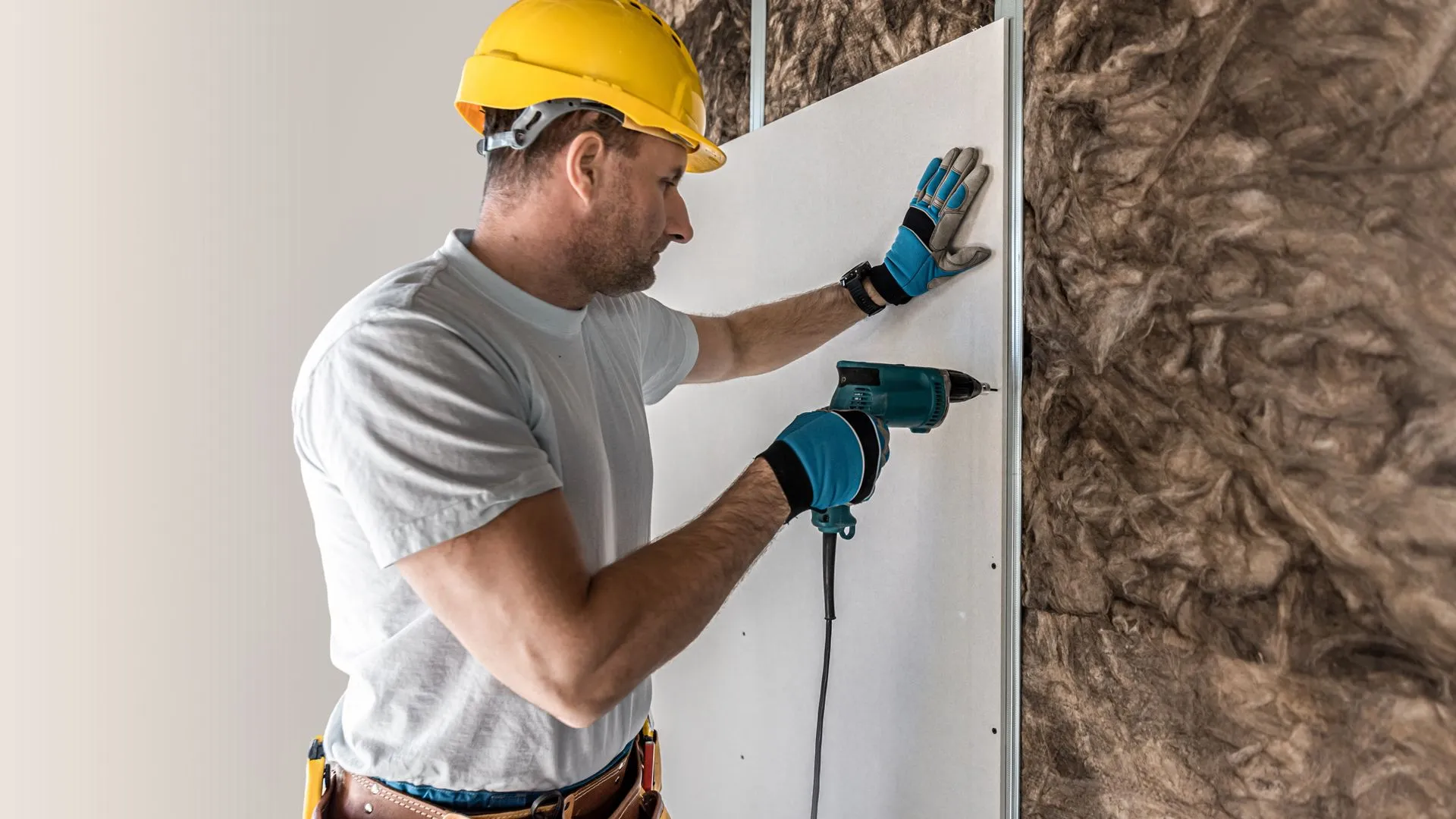
Partitions are typically the highest-cost line item within the interior finishes scope, and drywall and partition estimation deserves the level of care that reflects that fact. The variables involved are more numerous than they appear on a plan view. Partition height matters because taller assemblies require more material and more labor, and some heights trigger seismic bracing requirements that add cost. Partition type matters because the difference between a standard single-layer assembly and a rated, double-layer, sound-attenuated assembly can double the cost per linear foot.
However, a thorough partition takeoff traces every wall on the plans, assigns it to the correct type from the partition schedule, and calculates both the linear footage and the square footage of each assembly. Stud spacing, drywall layers, insulation, backing for wall-mounted equipment, and blocking for casework all need to be captured. Interior construction takeoff services that skip any of those components are setting up the project for field extras.
Ceilings are a finish element where the gap between a preliminary allowance and the actual cost can be substantial. Ceiling estimation services exist because a 2×4 lay-in acoustic tile grid and a custom wood slat ceiling with concealed grid and integrated lighting are both described as ceilings on a project summary sheet, but they bear almost no resemblance to each other in terms of cost, lead time, or installation complexity.
Professional ceiling estimation breaks the scope down by system type: lay-in ACT, gypsum board, open to structure, specialty wood or metal panel, stretched fabric, and any combination thereof. Each type gets its own square footage, its own material pricing, and its own labor factor. The estimator also accounts for ceiling height, access conditions, coordination with mechanical and electrical systems above the grid, and the cost of any supplemental structure required to support heavier ceiling systems.
Millwork is where interior projects get expensive quickly, and where estimates based on superficial scope reads go wrong most often. Millwork cost estimation requires a thorough understanding of what is being specified: the wood species or veneer, the finish type, the hardware allowances, the substrate, and whether the work is shop-fabricated custom millwork or modular casework. Those distinctions drive enormous cost differences.
A proper millwork estimate identifies every item in the millwork drawings and specifications: reception desks, conference room credenzas, built-in bookshelves, kitchen and break room casework, retail display fixtures, and any other custom wood or composite elements in the scope. Each item is priced by the linear foot, by the unit, or by the component, depending on how it is best described. Installation costs are estimated separately and account for field conditions, the sequence relative to other finish trades, and any site-built components that supplement the shop-fabricated pieces.
Takeoff is the measurement step that every cost estimate depends on. Interior construction takeoff services perform the systematic quantification of all finish scope items from the construction documents, and the accuracy of that step determines the accuracy of everything that follows. A takeoff that misses a partition type, underestimate ceiling coverage, or fails to capture all the millwork items produces a budget with gaps baked in from the start.
Digital takeoff platforms have improved speed and reduced human counting errors significantly. Tools like Bluebeam Revu and On-Screen Takeoff allow estimators to measure directly on calibrated digital drawings, organize quantities by room or zone, and link measurements to cost assemblies in real time. Firms like EZ Estimation have integrated these tools into a structured takeoff workflow that ties directly to estimating, so the quantities that feed the cost model are traceable back to the drawings rather than reconstructed from memory or assumption.
Interior finishes are the part of a construction project that occupants experience every day. Getting them right requires more than good design. It requires cost planning that is detailed enough to hold up through procurement, construction, and closeout without producing the kind of budget surprises that damage client relationships and project margins.
Professional interior finishes estimation brings the discipline to that process. It measures the right quantities, applies current and realistic pricing, and organizes the information in a way that project teams can act on at every phase. Whether the scope is a straightforward tenant improvement or a complex multi-phase commercial interior, the investment in accurate interior finishes cost estimation is one of the most reliable ways to improve financial outcomes and project execution quality.










EZ Estimation is a professional consultancy specializing in providing construction cost estimates. The company is offering construction cost estimating and take off services to the general contractors, engineering firms, developers, subcontractors, owners and investors.

SERVICES
Contact Info
© 2025, ezestimation All rights reserved