Turnaround Time 24-48 Hours!

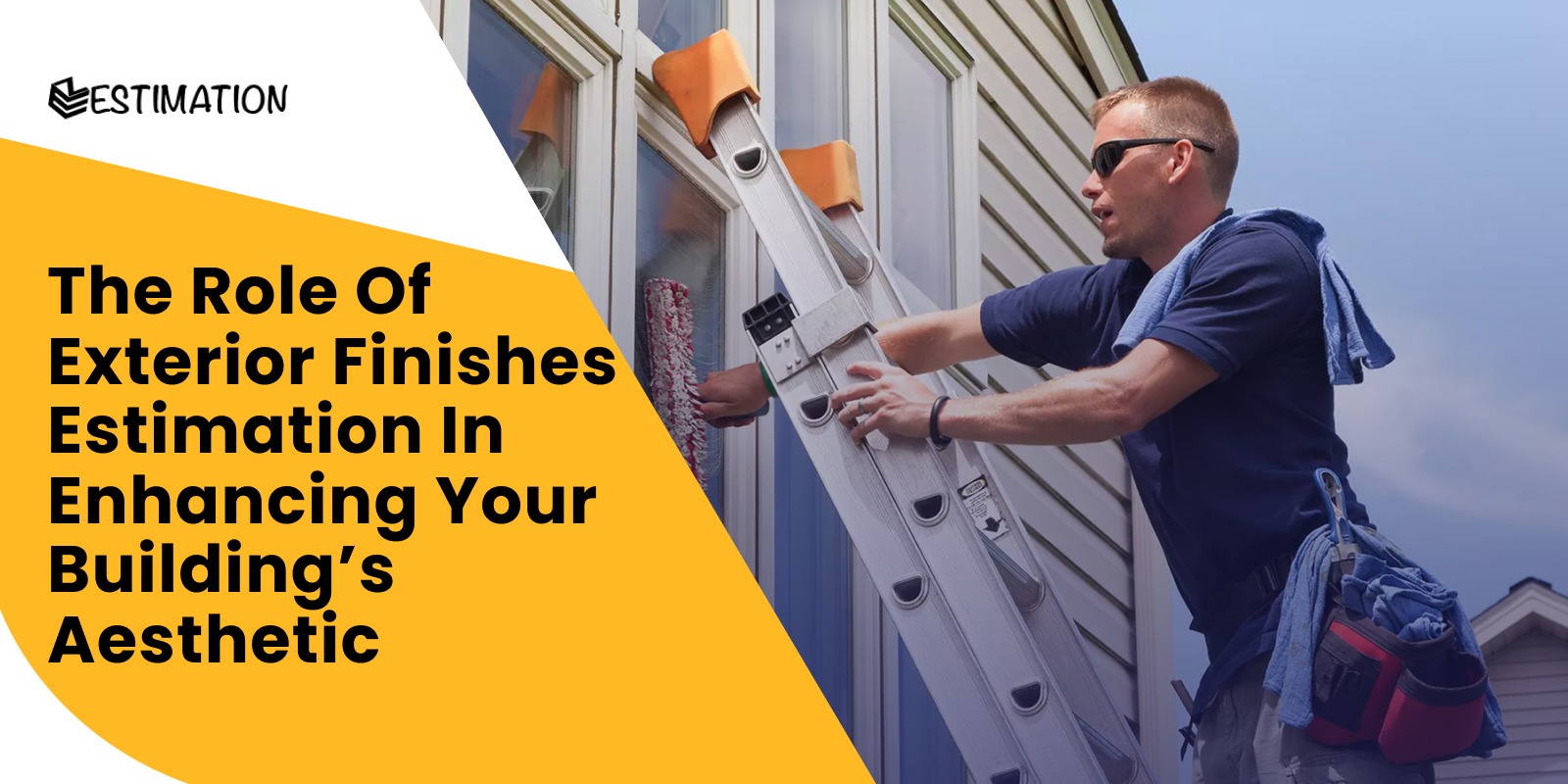
A building’s exterior does more than keep weather out. It is the first thing a client sees, the visual argument a developer makes to the market, and in many cases the single largest driver of perceived value before anyone steps through the door. Roofing systems, cladding materials, curtain walls, storefronts, soffits, sealants, and coatings all contribute to that impression, and every one of them carries a price tag that needs to be understood well before construction begins.
Exterior finishes estimation is the discipline that makes those costs knowable. When the quantities are measured carefully, the materials are priced at current market rates, and the labor assumptions reflect realistic field conditions, project teams have the information they need to make good decisions. They can choose between cladding systems based on real numbers, identify where the budget is tight before it becomes a crisis, and walk into the construction phase confident that the estimate reflects what the drawings actually specify. On commercial projects and large-scale renovations, that level of cost clarity is not optional. It is how projects stay on budget.
Exterior finishes tend to be underestimated in the early stages of project planning, and the reasons are predictable. Early-phase budgets lean heavily on square-foot benchmarks derived from comparable projects, and those benchmarks rarely capture the full complexity of a specific building’s exterior design. A commercial office building with a glass and aluminum curtain wall system has a very different cost profile than one clad in brick veneer with punched windows, even if the floor plates are identical. Applying the wrong benchmark, or a benchmark from a market two years removed from today’s material prices, produces a number that will not survive contact with actual bids.
Professional exterior estimators who work from current drawings and current pricing data catch those gaps before they become problems. Building exterior finishes estimate work that is done properly identifies every cladding type by area, every roofing system by square, every window and storefront unit by size and specification, and every ancillary item including flashing, sealant, insulation, and vapor barrier that the exterior assembly requires. That level of detail is what separates a reliable budget from a placeholder.
The scope of exterior finishes estimating is broader than most project stakeholders initially appreciate. On a typical commercial project, the exterior finishes scope includes the primary cladding system, whether that is brick masonry, EIFS, metal panel, fiber cement, natural stone, or a combination of materials. It includes the roofing system: membrane, metal standing seam, shingles, or a built-up assembly, along with all associated insulation, decking, flashing, drains, and edge metal. It includes glazing systems: curtain wall, storefront, windows, skylights, and any structural silicone or point-fixed glass assemblies specified by the architect.
Beyond those primary elements, a complete exterior finishing cost estimation accounts for soffit and systems, exterior coatings and sealers on concrete or masonry, caulking and joint sealants throughout the envelope, louvers and grilles, canopies and sunshades, exterior lighting rough-in coordination, and any specialty cladding elements such as terra cotta, zinc panels, or rainscreen systems that carry longer lead times and premium installation costs. Exterior finishing materials estimation that skips any of those categories produces a budget with gaps that will surface during bidding or, worse, during construction.
There is a direct relationship between the quality of exterior finishes estimation and the quality of the finished building. It works like this: when project teams have accurate cost data early in the design process, they can make informed decisions about material selection and system design. They know what a given cladding upgrade actually costs, what it buys in terms of performance and aesthetics, and whether the project budget can support it. That information enables real design conversations rather than guesswork followed by value engineering.
When cost data is absent or unreliable, the design process operates in a vacuum. Architects specify what they believe the project should be. Estimators apply allowances that may or may not reflect the specification intent. Bids come in higher than expected. The value engineering scramble that follows often eliminates the most visible and architecturally significant exterior elements first, because those are the line items that are easiest to identify and hardest to defend when the conversation shifts to cutting costs quickly.
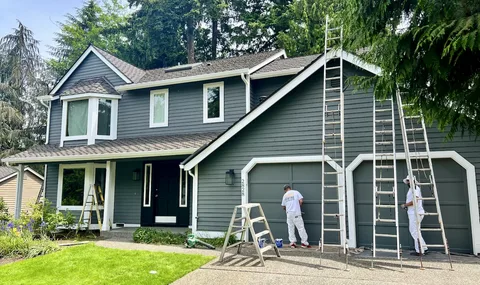
Exterior construction estimating follows the same fundamental logic as any other trade scope: measure the quantities, apply the unit costs, account for the conditions. The execution, though, requires specific knowledge of how exterior systems are assembled, what drives cost variation within each system type, and how regional factors affect both material pricing and labor productivity.
The takeoff process for exterior finishes begins with the architectural drawings and specifications. Cladding areas are measured by elevation, broken down by material type, and adjusted for openings. Roofing areas are calculated from roof plans or structural drawings, with separate measurement of low-slope and steep-slope areas since they carry different labor factors. Window and storefront units are counted from the window schedule and verified against the elevations. Each item is assigned to the correct specification section so that pricing reflects the actual material and installation method specified, not a generic approximation.
Exterior finishing materials estimation requires current pricing from suppliers and subcontractors, not published cost guides used as a primary source. Material costs for metal panels, glazing systems, and specialty cladding products fluctuate with commodity markets, and a price list that was accurate six months ago may be off by a meaningful percentage today. Professional exterior estimators maintain active supplier relationships and request current quotations for significant material categories rather than relying on historical data. For custom or fabricated components, obtaining preliminary pricing from fabricators during the design phase is standard practice on well-managed projects.
Installation labor for exterior finishes is sensitive to building height, facade complexity, and site access conditions. A ground-level brick veneer installation on a single-story retail building uses a very different productivity assumption than the same material applied at the upper floors of a six-story building where swing stage access is required. EIFS applied over a flat, straightforward elevation costs less to install per square foot than the same system applied over a facade with numerous projections, reveals, and transitions. Construction exterior estimation that applies flat labor rates without adjusting for project-specific conditions consistently produces numbers that do not hold up at bid time.
The exterior of a building is a significant investment, and like any significant investment, it deserves to be understood in financial terms before commitments are made. Exterior finishes estimation provides that understanding: accurate quantities, realistic pricing, and a documented scope that supports every major decision from design development through project closeout.
For contractors putting together competitive bids, for developers managing pro forma budgets, and for architects trying to deliver design intent within a defined cost envelope, the quality of exterior finishes cost estimation directly affects outcomes. Buildings that are planned with accurate cost data tend to be built more efficiently, with fewer surprises, and with a higher probability of delivering the aesthetic the design team intended. That is not a coincidence. It is the result of taking exterior finishes estimating seriously from the first day of design through the last day of construction.










EZ Estimation is a professional consultancy specializing in providing construction cost estimates. The company is offering construction cost estimating and take off services to the general contractors, engineering firms, developers, subcontractors, owners and investors.

SERVICES
Contact Info
© 2025, ezestimation All rights reserved