
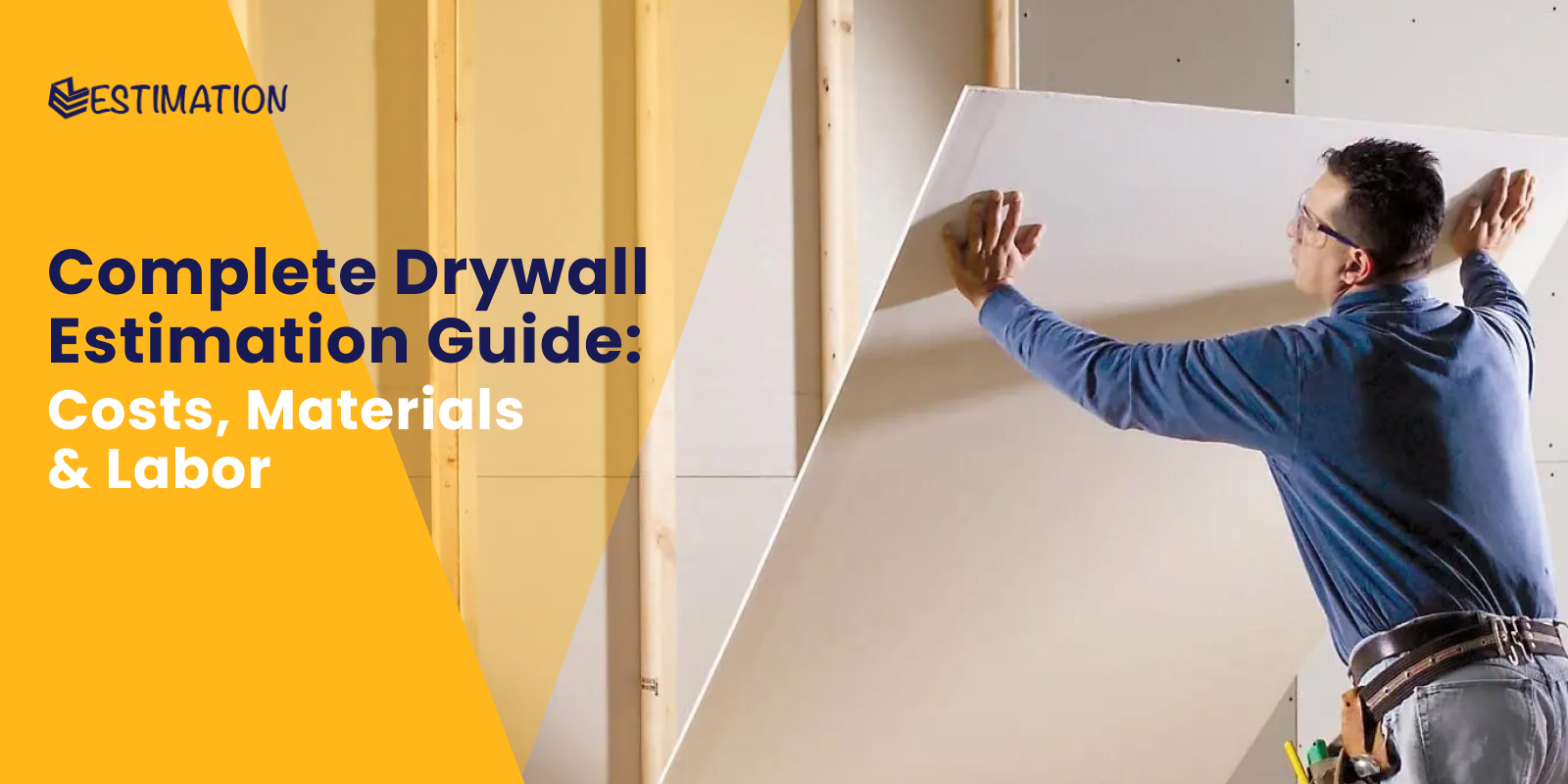
Most construction budgets that go sideways do not fail at the foundation or the framing. They fail in the finishing phases and drywall is where that unraveling often begins. It looks straightforward on paper: hang the board, tape the joints, finish the surfaces. But between sheet counts, waste factors, lift rentals, finishing labor grades, and regional material pricing, a drywall scope has more moving parts than most builders anticipate until the invoices start arriving.
This guide exists for builders, developers, and project managers who want to understand how professional drywall estimation services actually work, what goes into a credible number, where estimates typically fall short, and how to approach drywall budgeting with the precision the scope demands.
Drywall is rarely the most glamorous line item in a construction budget. That is partly why it gets underestimated. It is treated as a commodity trade, straightforward to price, easy to adjust, until the project is underway and the real scope becomes clear.
The truth is that accurate drywall project costing is one of the more technically demanding tasks in construction estimating. Board type selection, ceiling height, room complexity, finish level requirements, fire and acoustic ratings, and accessibility for installation crews all affect both material and labor costs in ways that a simple square-footage calculation will not capture.
A builder who prices drywall at a flat rate per square foot on every job will be competitive on simple open-floor plans and consistently underwater on complex residential or commercial work. That pattern, repeated across a season, is how margins disappear.
Before any numbers go on paper, a solid estimate requires understanding the full scope. Drywall budgeting and planning begins with a clear picture of what the project actually involves.
Board type and thickness matters more than most clients realize. Standard half-inch board is the workhorse of residential work, but type X fire-rated board, moisture-resistant board for bathrooms and kitchens, abuse-resistant board for commercial corridors, and impact-resistant board for high-traffic areas all carry different costs. Specifying the wrong board type on a scope creates problems both at the estimating stage and on the job site.
Ceiling configuration is one of the most significant cost drivers in any drywall scope. Flat ceilings at standard height are the baseline. Vaulted ceilings, coffered details, tray configurations, and soffits each add labor time and material complexity. Anything above nine feet typically requires scaffolding or lift equipment, a cost that needs to be captured explicitly rather than absorbed into a general labor rate.
Drywall material cost calculation starts with an accurate quantity takeoff. This means measuring every wall and ceiling surface, calculating net area, applying a waste factor, and converting that area into board counts based on the sheet size being used.
Standard drywall sheets come in 4×8, 4×10, 4×12, and 4×16 formats. Larger sheets mean fewer butt joints, which reduces finishing labor, but they also require more handling effort and may not be practical in tight spaces or on upper floors without mechanical assistance. Sheet size selection affects both material cost and labor productivity, and the estimate needs to reflect that relationship.
Waste factors are where inexperienced estimators consistently leave money on the table. A standard waste allowance of 10 to 15 percent is common for straightforward work, but projects with significant architectural detail — multiple window and door openings, irregular room shapes, curved walls — may warrant 18 to 20 percent. Underestimating waste means running short mid-project, paying for emergency deliveries, and dealing with scheduling delays when a crew runs out of board.
Beyond the drywall panels themselves, drywall installation cost analysis must capture the full material scope: joint compound (typically three types; setting, topping, and all-purpose used at different stages), tape, corner bead, fasteners, and any specialized accessories required for fire-rated or acoustic assemblies. These ancillary materials can represent 15 to 25 percent of total material cost on a detailed scope and should never be rolled into a generic allowance.
Material costs are easier to pin down than labor, and yet labor is where most drywall budgets drift. Thorough labor cost estimation for drywall requires more than a flat per-square-foot rate applied across the entire scope.
Hanging rates vary based on board weight, ceiling height, room configuration, and crew experience. A skilled crew hanging standard board on straightforward residential walls might hang 1,500 to 2,000 square feet per day. That same crew on a commercial project with fire-rated assemblies, mechanical penetrations to work around, and varied ceiling heights might achieve half that rate. The estimate needs to reflect the actual conditions of the specific project, not an industry average that may have been developed under different circumstances.
Finishing labor is priced separately from hanging in most professional estimates because the skill level and time requirements are substantially different. Finishing is the phase that determines the visible quality of the work. Rushing it or underpricing it creates quality problems that are expensive to correct after paint has been applied.
For builders and contractors who do not carry dedicated estimating staff, drywall takeoff services provide access to the technical rigor that accurate pricing requires without the overhead of a full-time estimator.
A professional takeoff goes beyond basic square footage. It produces a board-by-board material schedule, a room-by-room labor breakdown, a list of specialty materials and accessories, and a clear record of the assumptions embedded in the estimate. That documentation is valuable not just for pricing the work but for managing it, when conditions in the field differ from the drawings, a detailed takeoff makes it much easier to quantify the impact and process a change order quickly.
Construction drywall estimating at the professional level also incorporates current market pricing, regional labor rates, and material lead times, factors that a quick in-house estimate based on historical data will miss. In a market where material costs have shown significant volatility, that currency matters.
For smaller and mid-size homebuilders, the question of whether to build internal estimating capacity or partner with a specialist service is worth careful thought. Internal estimators offer deep familiarity with a builder’s preferences, supplier relationships, and project types. External homebuilder estimation services offer scalability, current market pricing data, and the ability to handle surge capacity during busy bidding periods.
The best arrangement is one where whoever is doing the estimating has both current knowledge of exterior material pricing and a clear understanding of the builder’s standards and expectations. Estimating is, at its core, a communication task as much as a mathematical one.
Even experienced builders fall into familiar traps when pricing drywall work. Here are the ones that cause the most damage:
Pricing by area alone without accounting for board type, finish level, or ceiling configuration produces numbers that look right in aggregate but break down at the trade level. Drywall is not a uniform commodity, the scope needs to reflect what is actually being built.
Ignoring equipment costs is another persistent gap. Scaffolding, lifts, and hoisting equipment for high or heavy work are real costs that need to appear in the estimate explicitly. Folding them into labor rates creates confusion and makes it harder to manage the budget when conditions change.
Closing that gap requires commitment at the front end of every project. It requires complete drawings before pricing begins. It requires a scope review that questions assumptions rather than accepting defaults. It requires estimators who have seen enough exterior scopes to know where the surprises typically hide.
Homebuilders who take exterior finishes estimation seriously, who invest in the process, the tools, and the expertise build more predictable projects. They protect their margins. They deliver fewer surprises to clients. And they build a reputation for reliable pricing that becomes a competitive advantage in a market where trust is hard to earn and easy to lose.
The standard a drywall estimate should be held to is simple: it should hold up from bid day through project closeout without requiring significant revision unless the scope itself changes. That standard is achievable, but it requires discipline in the estimating process, complete drawings, current pricing, realistic labor rates, and a scope review that challenges assumptions rather than accepting defaults.
Builders who approach drywall estimation services with that standard in mind, whether through internal estimating capacity or by partnering with a specialist; protect their margins, reduce friction with clients and subcontractors, and build a track record of delivering projects on budget. In a competitive construction market, that track record is worth more than the cost of getting the estimate right the first time
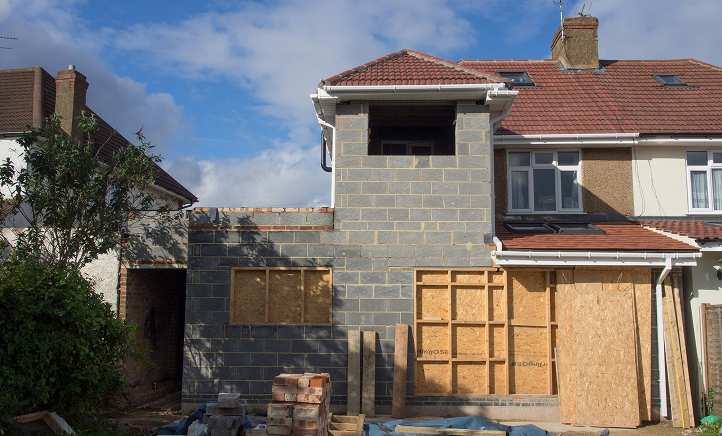
We estimate exterior wall costs including siding, stucco, cladding, and finishes.
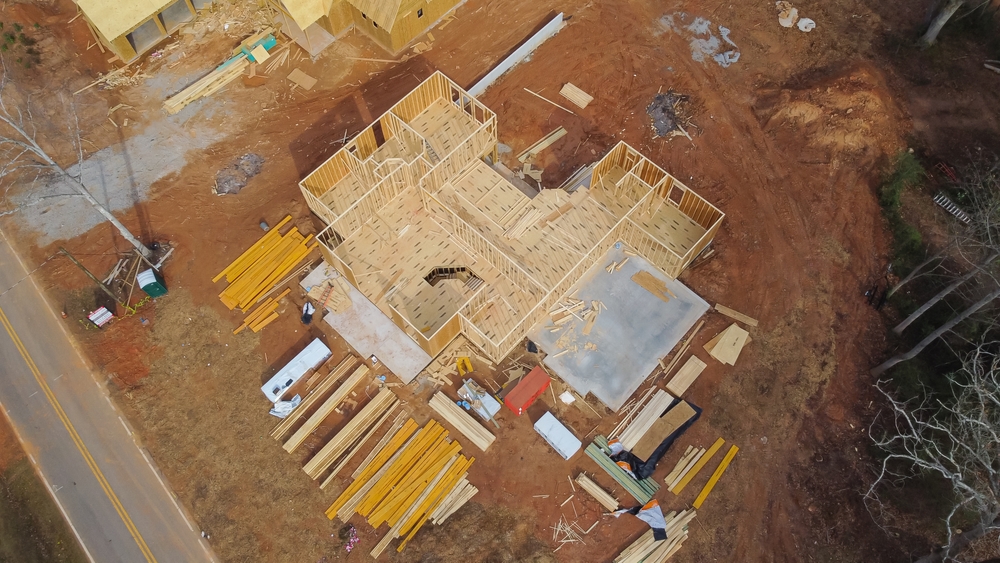
We calculate all exterior protection and weatherproofing costs for complete building envelope assemblies and installations.
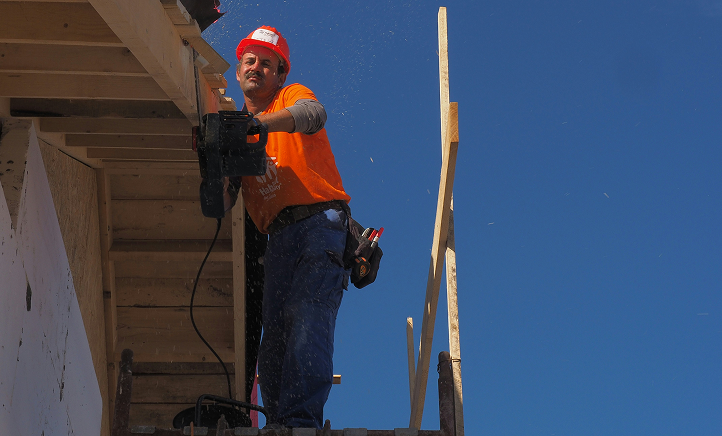
We calculate drywall costs including gypsum board, metal framing, and finishing materials.
We calculate interior costs including ceilings, millwork, doors, hardware, and finishes.